



July 16, 2026
Why efficiency metrics alone don't guarantee profitable growth
Return on ad spend (ROAS) gave marketers clarity. It just wasn’t the clarity they thought they were getting. It offers a simple answer to a critical question: For every dollar spent, how much revenue came back? That clarity helped performance marketing scale, giving teams a common language for efficiency and accountability.
But efficiency is not the same as profitability.
Today, marketers can hit ROAS targets while still falling short of profitable growth. The issue isn’t that ROAS is wrong; it’s that it doesn’t distinguish between revenue that was influenced and revenue that was truly incremental. As marketing environments grow more complex, that distinction becomes harder to ignore.
When efficiency masks unprofitable spend
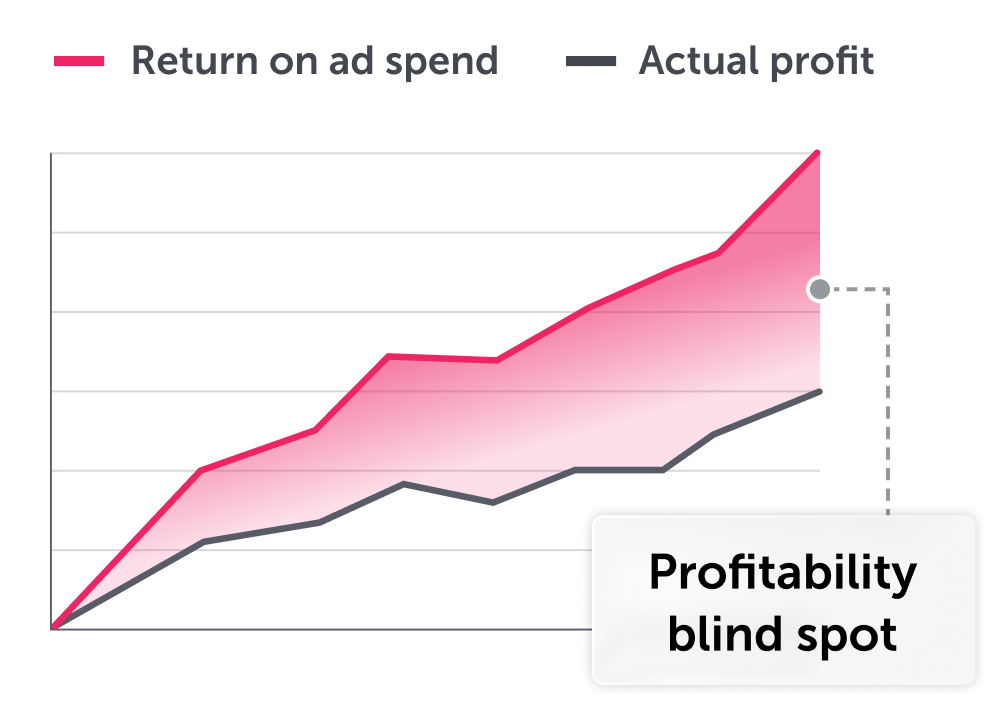
Imagine a brand runs a 20% discount through a retail media channel. ROAS spikes. The campaign looks like a win.
But if those shoppers were already planning to make that purchase, the promotion didn’t create demand. It pulled it forward and discounted it. Revenue went up. Profit did not.
This can create a profitability blind spot where true growth opportunities go underfunded. The system ultimately rewards activity that captures existing demand.
The result is a paradox: Campaigns look more efficient on paper as overall profitability stagnates.
The incrementality gap
The core issue is that ROAS reflects correlation, not causation. It shows that revenue occurred alongside spend, but not whether spend created that revenue.
As performance marketing expanded across promotions, retail media, and overlapping channels, this limitation became more pronounced. Multiple touchpoints influence the same purchase, attribution signals conflict, and the line between baseline demand and incremental demand blurs.
Without incrementality, teams risk optimizing toward customers who were already likely to convert. The economics look attractive, but margin impact may be minimal. In some cases, heavy discounting can even erode profitability while maintaining strong ROAS.
This is why marketers increasingly ask a different question: not just “What revenue did we generate?” but “What revenue would not have existed without this spend?”
Answering it requires measurement grounded in observed, item-level purchase behavior rather than modeled correlation. That's the principle behind closed-loop approaches like LiveLift, which separates the sales a campaign actually drove from the demand that already exists, measuring the exact cost to generate each incremental dollar of revenue.
That change shifts the way performance is evaluated.
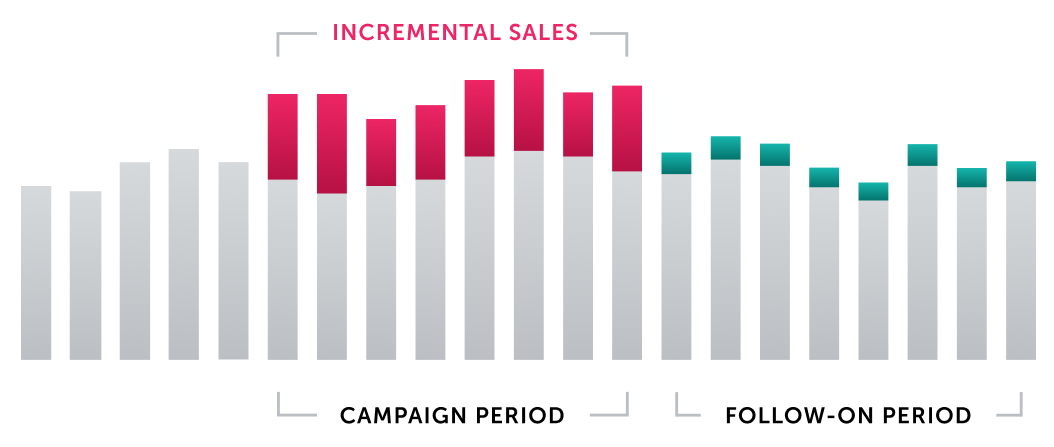
Profitability requires incremental growth
Models and extrapolation play an important role, especially at scale, but they are strongest when anchored in observed shopper behavior and item-level sales. With that foundation, marketers have a clear view of which offers are creating demand, where performance is strongest, and how to optimize spend toward measurable outcomes.
This reframes efficiency in profitability terms.
A campaign with lower ROAS but strong incremental lift may contribute more profit than a high-ROAS campaign that primarily captures existing demand. When incremental sales are measured directly, marketers can compare tactics based on real growth rather than attributed credit.
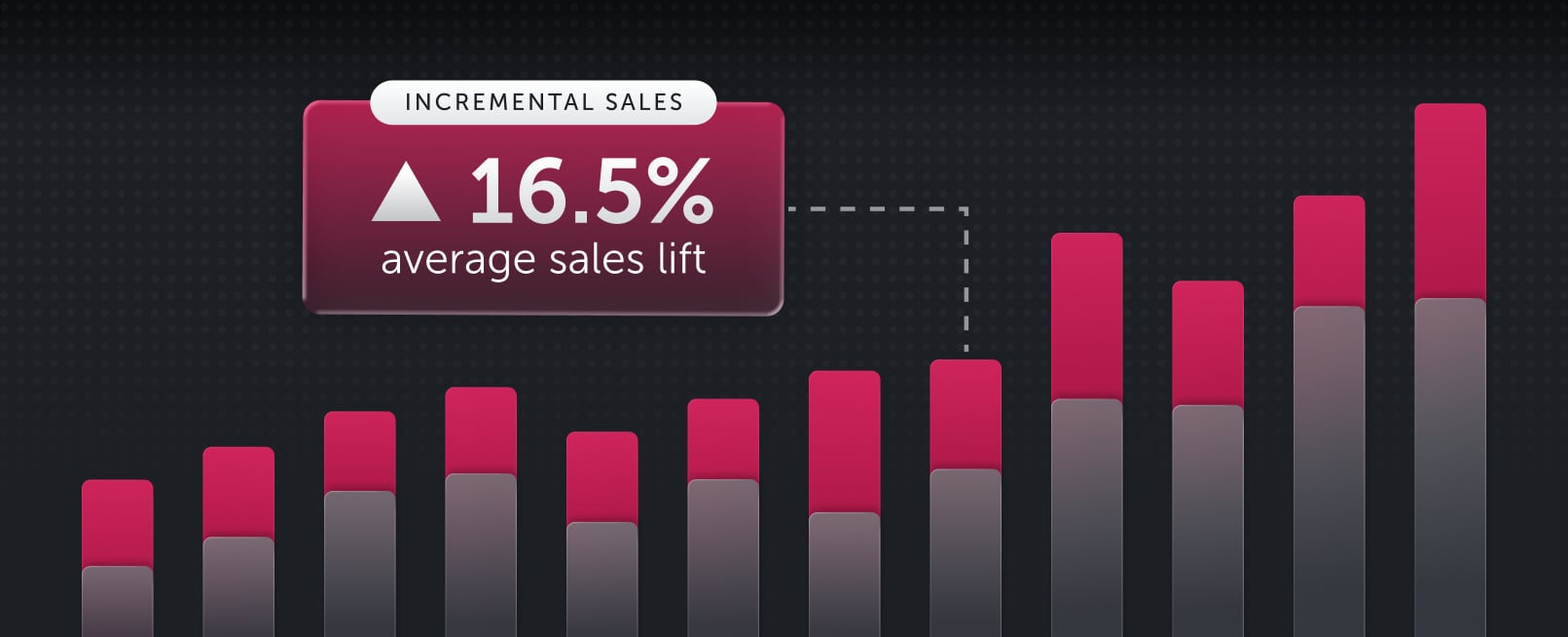
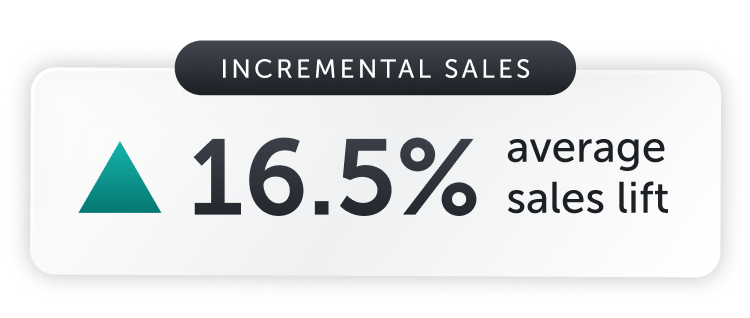
The exciting news? A recent Circana study shows that Ibotta promotions campaigns didn't just move products, they demonstrated a +16.5% average lift in incremental sales.
This shift to incremental performance also changes optimization behavior. Teams begin reallocating spend toward audiences, offers, and channels that expand reach and grow untapped demand. Promotions can be adjusted mid-flight. Underperforming tactics can be scaled back before the budget is exhausted. Measurement shifts from retrospective reporting to an operational feedback loop.
Why this matters now
The profitability gap inside ROAS was easier to overlook when channels operated independently and attribution paths were simpler. Today, marketing ecosystems overlap, and multiple investments influence the same shopper. As a result, efficiency metrics alone are less reliable indicators of growth.
At the same time, expectations are rising. Marketing budgets are increasingly evaluated on their contribution to revenue and margin together, not just top-line return. That puts pressure on measurement frameworks to distinguish between activity and impact.
Incrementality closes this gap. It connects spend directly to net-new demand and allows marketers to evaluate whether efficiency is translating into profitable growth.
A complementary role for ROAS
None of this makes ROAS obsolete. It remains a useful directional metric and a familiar benchmark across organizations. But on its own, it cannot answer the profitability question.
Incremental measurement complements ROAS by adding the missing dimension of causation. Used together, the two metrics provide a fuller picture of performance, revealing not just how much revenue was generated, but how much was genuinely incremental.
That distinction becomes increasingly important as marketing moves toward outcome-based optimization. If you optimize toward attributed revenue, AI will find every way to capture existing demand more efficiently. If you optimize toward incremental growth, it will find ways to create it.
The metric defines the outcome.
The bottom line
ROAS shows efficiency, but it rarely reveals profitability on its own. Marketers can meet return targets while failing to generate meaningful growth, especially in environments where existing demand dominates results.
Incremental measurement closes that gap. By isolating net-new demand, it aligns optimization with profitable outcomes rather than attributed activity.
The question is no longer how efficiently marketing converts demand. It’s whether it creates incremental demand, and if so, how much.