


November 20, 2026
Most holiday marketing plans end with the gifting season, missing a key opportunity.
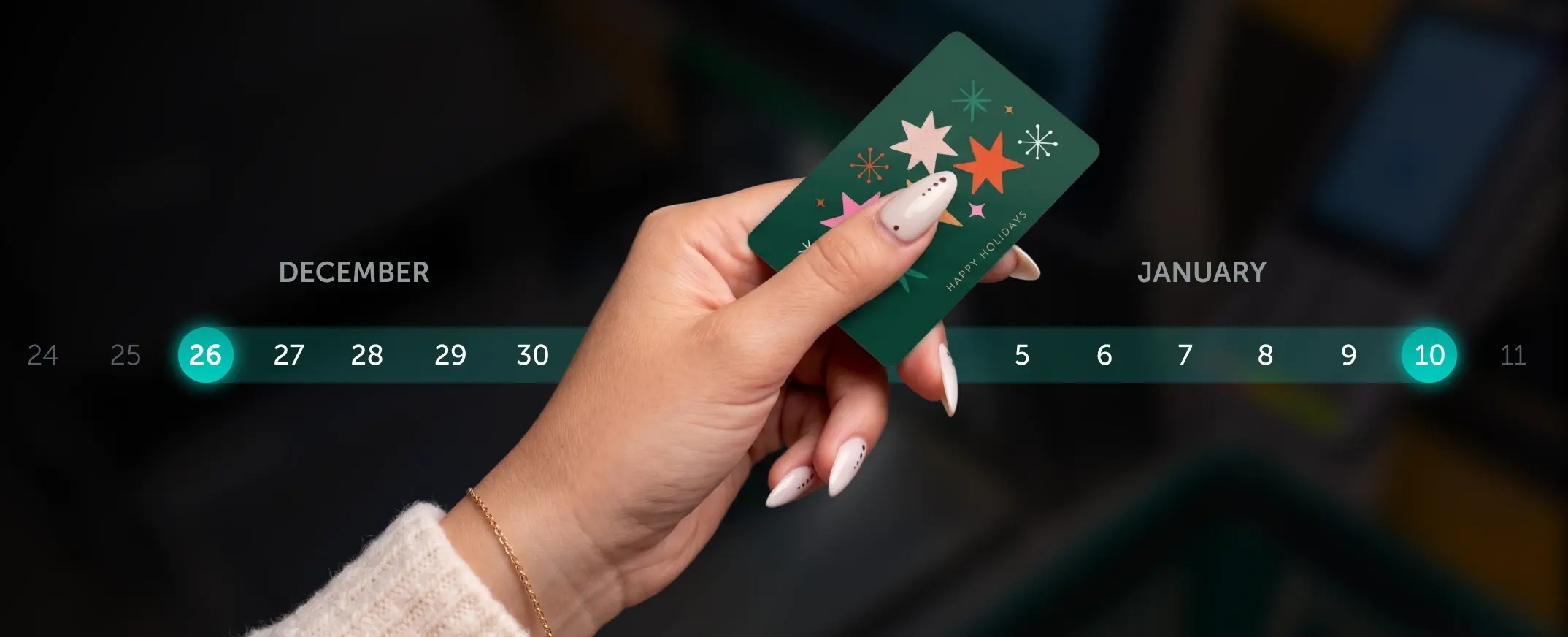
Starting December 26, shoppers are flush with gift cards and hosting has left them out of everyday items. This creates a unique shopping window until roughly January 10, known as Q5. It has its own demand, its own triggers, and far fewer brands competing for the basket.
Two things drive Q5 demand
Gift cards. About two in three people give a gift card during the holidays, and 63% of recipients use it within a month. Walmart gift cards are the #2 most searched gift card by retailer, and DoorDash is the most purchased gift card in food delivery. That's a wave of spending power landing in the exact places CPG brands sell.
The restock. Hosting drains the pantry and the laundry room. During Q5, shoppers restock across a season-high average of 4.6 categories, from cleaning and laundry to food storage and paper goods. In the week after Christmas 2025, Nielsen recorded week-over-week unit gains in laundry care (18%), household cleaner and supplies (12.2%), and cereal and granola (6.4%). Vitamins and oils units rose 19.6% in the week of December 28 – January 3.
Fewer offers, more open shoppers
Here's the gap. Many brands go dark after the holidays, and offer availability drops in categories where shoppers are still actively buying. Fewer offers competing for the same trip means a brand that stays on has a better chance to be the one that gets picked.
Shoppers are ready to be persuaded. 94% stay open to buying a brand they tried during the holidays, and 74% say a good promotion can convince them to try a brand they've never bought before.
What it looks like in practice
A leading laundry detergent brand wanted post-holiday shoppers to move up to its larger suitcase pack during the restock. It ran a $5 offer on the suitcase size in early January. 75.8% of redeemers traded up to the larger pack, making them 5.5x more likely to size up than non-redeemers - 27.4% of whom actually traded down.
The restock was happening either way. The offer decided which size, and which brand, went home.
Carry it into January
Q5 rolls straight into the January reset. Shoppers made 20.8 trips in January 2026 versus 18.3 in a typical month, a 14% increase, and January is the biggest month of the year for vitamins and supplements. Every extra trip is another moment of choice.
Timing matters. On the Ibotta Performance Network, repeat redemption rates climb the longer a campaign runs, from 12% for campaigns under four weeks to 27% for campaigns running eight to 12 weeks. A first purchase in late December has time to become a habit by February.
How to plan for Q5
-
Fund the January offer before the December campaign ends. By the time holiday results are in, the budget is usually committed elsewhere.
-
Match the offer to the restock. Larger pack sizes, multi-unit buys, and everyday staples fit how shoppers buy in this window.
-
Show up where gift cards get spent, including delivery apps, not only the shelf.
The Ibotta Performance Network reaches 200M+ consumers across 96% of U.S. households, including more than 90% of the third-party grocery delivery market. With a pay-per-sale model, brands pay for qualifying purchases, not just exposure, and can connect that investment to incremental sales.