



April 7, 2026
CPG marketers today have more data, more sophisticated tools, and more advanced modeling at their disposal than ever before. Yet despite these big investments in analytics, most of them don’t feel confident in their results.
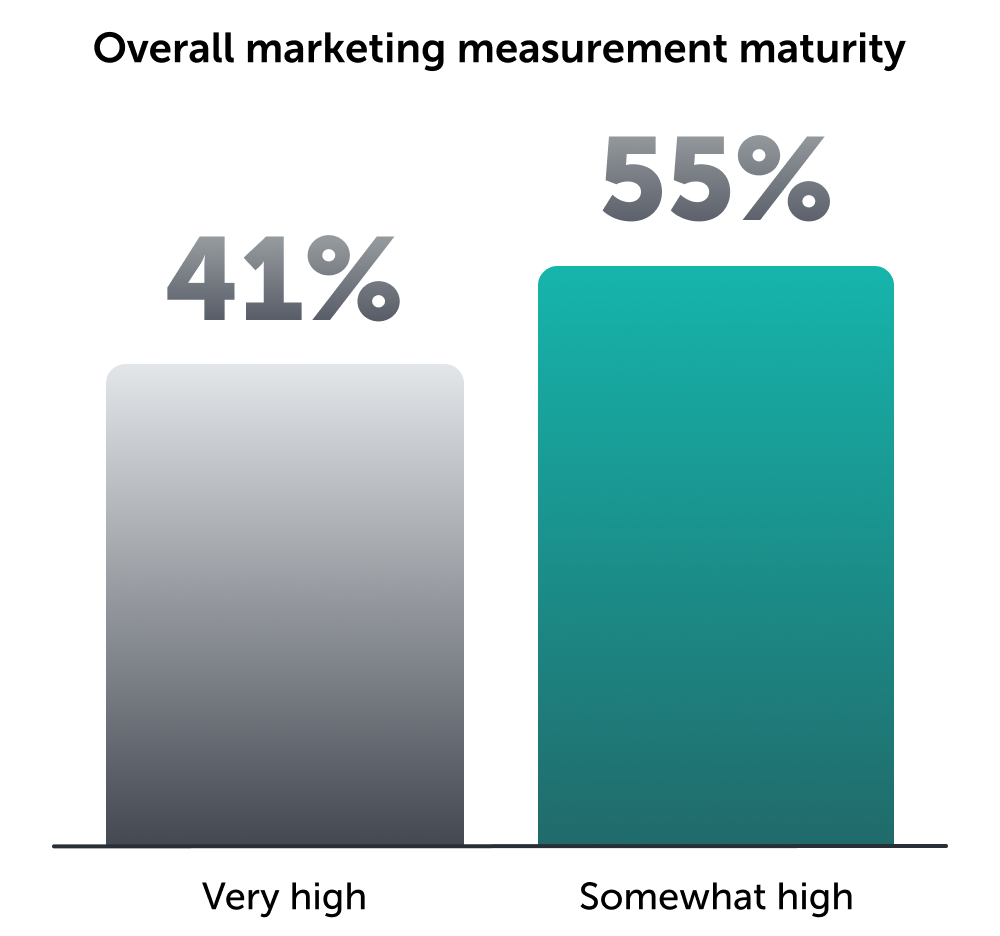
Our recent survey of CPG marketers on the state of their measurement capabilities reveals that 96% of marketers feel they have reached some level of measurement maturity. However, most of those respondents sit in a frustrating middle ground of “somewhat high” maturity, unable to connect the dots between walled gardens and disparate dashboards to create the kind of advanced reporting that drives competitive advantage.
So, why are sophisticated tools and high ambition falling short of delivering confident, decision-ready results? The answer isn't the technology. It's the systems that connect — or rather, fail to connect — the tools.
Advanced tools, incomplete insights
The language of modern marketing is sophisticated — we talk about unified marketing measurement, incrementality, and multi-touch attribution. But for many, the reality on the ground is far simpler and less strategic. As one CPG marketer shared, "A lot of times we couch results as a barometer more than a specific thing. It’s not about 15% versus 17%. It’s ‘we ran a promotion, it worked, sales increased.’ That’s the level we can prove."
This experience, shared by many marketers across the CPG industry, points to a deeper problem: the tools exist, but the connections between them don't. This is evidenced by the fact that 39% of marketers state they still rely on directional assumptions. Without a unified framework to reconcile data across platforms, even sophisticated measurement stacks struggle to produce insights with the precision and clarity needed to drive confident decisions. The result is a gap between what marketers aspire to measure and what they can actually act on.
The cost of fragmentation
What’s actually holding back measurement maturity and confidence? Our research uncovered one possible culprit: fragmentation.
CPG marketers are pulling data from an overwhelming array of sources.
Partners relied on for measurement or reporting
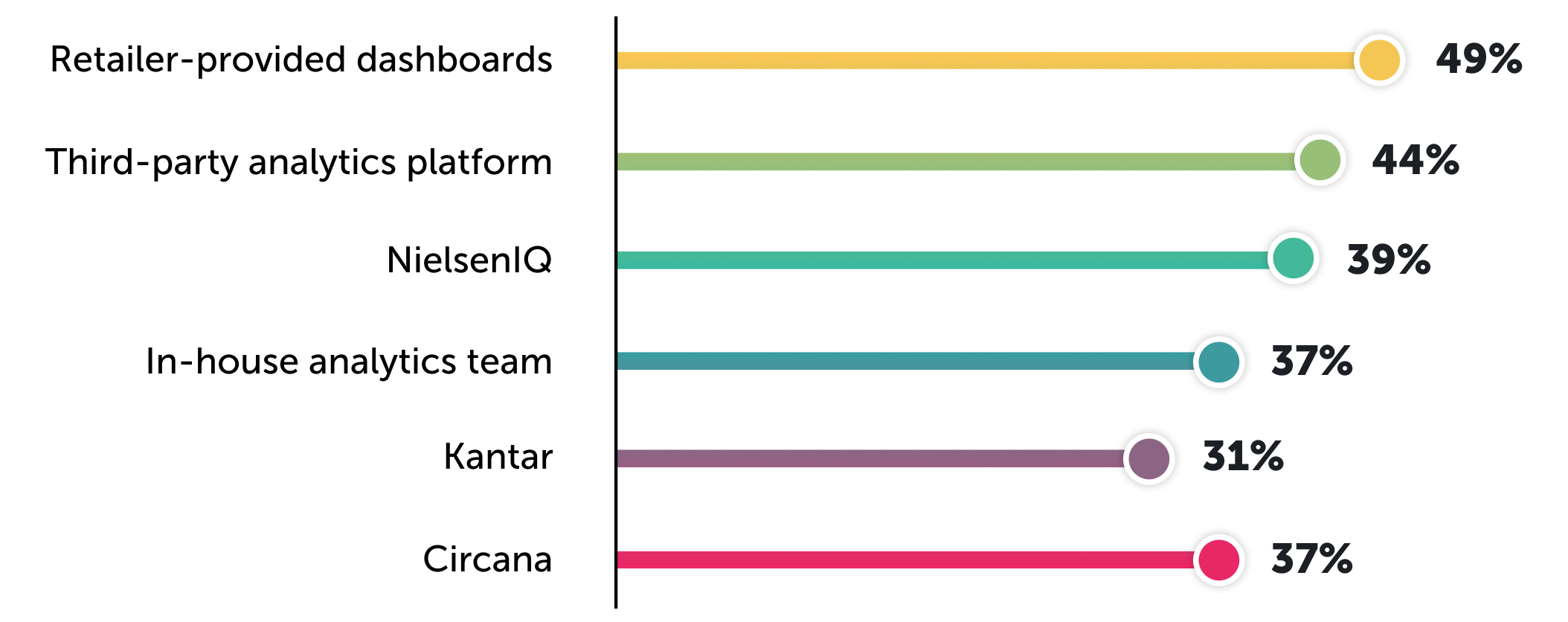
This isn't a coherent measurement stack; it's a spider web of disconnected systems and walled gardens. Each source has its own KPIs, its own reporting cadence, and even its own definition of key metrics like incrementality. The data, while individually credible, is rarely aligned and makes it difficult to ensure there is proper attribution of impact across sources and no double-counting.
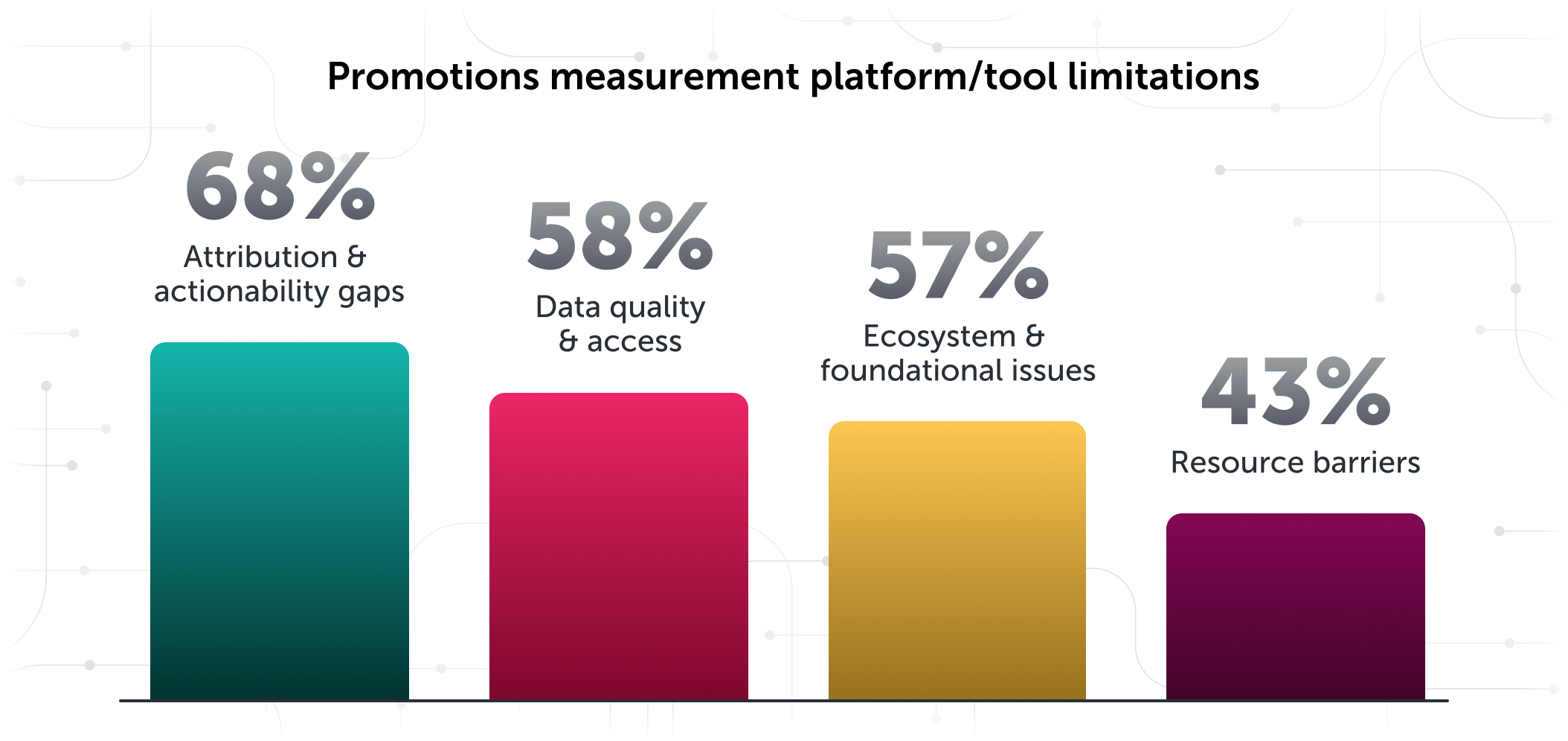
Based on a thematic bucketing of responses
This fragmentation doesn't just create spreadsheet headaches — it creates strategic blindness. Here’s what marketers told us they’re facing:
Data silos make it nearly impossible to ensure that cross-platform incremental impact is properly accounted for, resulting in misattributed sales and double-counting. Marketers want visibility into incrementality — what actually drove growth — not just a record of what happened.

Disparate dashboards and walled gardens create more questions than answers. Marketers want fewer data silos and better integration — a single, consistent view of performance that doesn't require constant reconciliation.
Fragmentation creates more noise than clarity. When every platform tells a different story, it becomes increasingly difficult to isolate what's actually working, leaving marketers without the causal clarity needed to make confident, timely decisions.
The confidence crisis
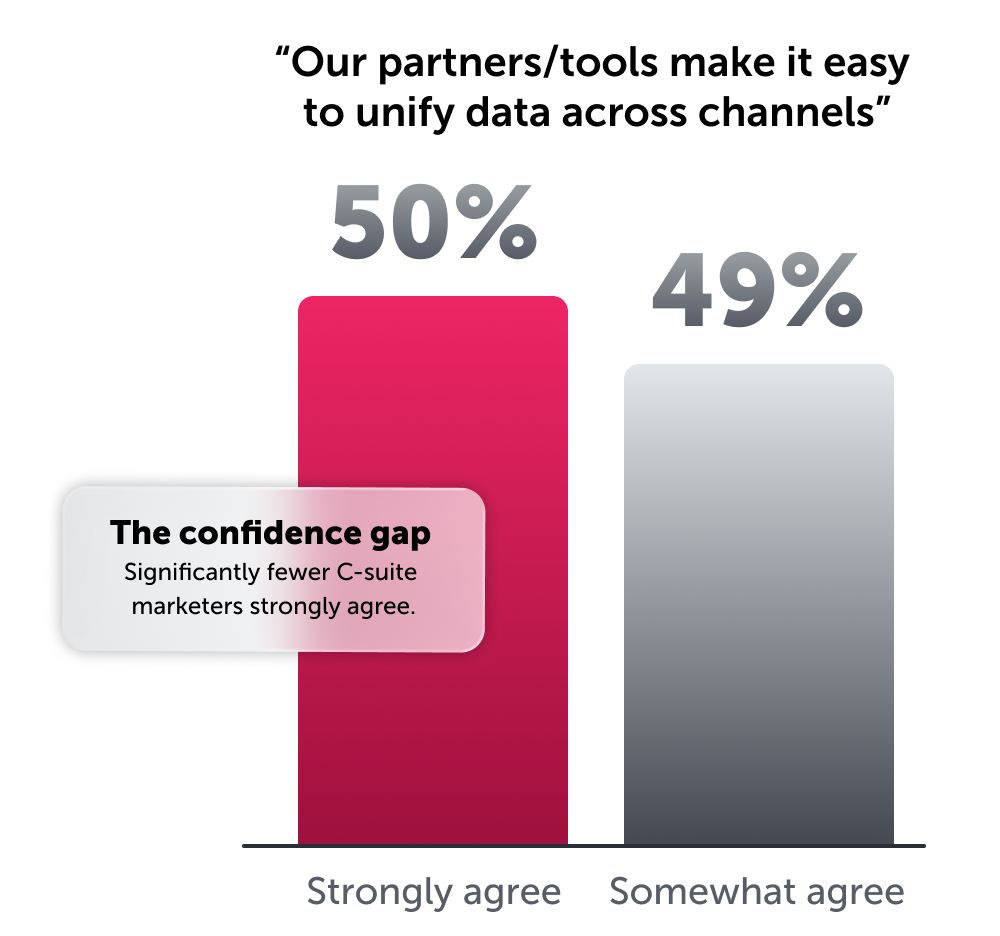
The scattershot data creates another insidious issue: a crisis of confidence. When data is scattered across multiple, inconsistent systems, it becomes harder for teams to present their findings with conviction.
Only 50% of the marketers we surveyed strongly agree that their tools make it easy to unify data across channels. That leaves half the industry making multimillion-dollar budget decisions without access to a true, unified view of performance.
That lack of confidence reflects not just individual tool limitations, but the cumulative effect of a fragmented industry ecosystem that has historically evolved faster than its measurement standards. The question isn’t whether CPG marketers need better data — they have plenty. The question is how can they connect the dots to get a complete picture of what works, what doesn't, and what can be optimized.
Ready to break the measurement plateau?
The future of CPG measurement demands solutions that deliver timely, trustworthy, and actionable insights. It’s time for measurement to shift from a passive reporting layer to an agile optimization engine.
Download our full report, The CPG Measurement Gap: Confidence, Causality, and the Case for a New Standard, to get the key research findings on measurement fragmentation, a deeper look at the confidence gap, and the precise capabilities your organization needs to transform its investments into predictable, profitable growth.
.png)
Download the full report now.
Learn more