



September 22, 2026
Ask a shopper when the holidays start and you'll get an answer that has less to do with the calendar than with their bank account.
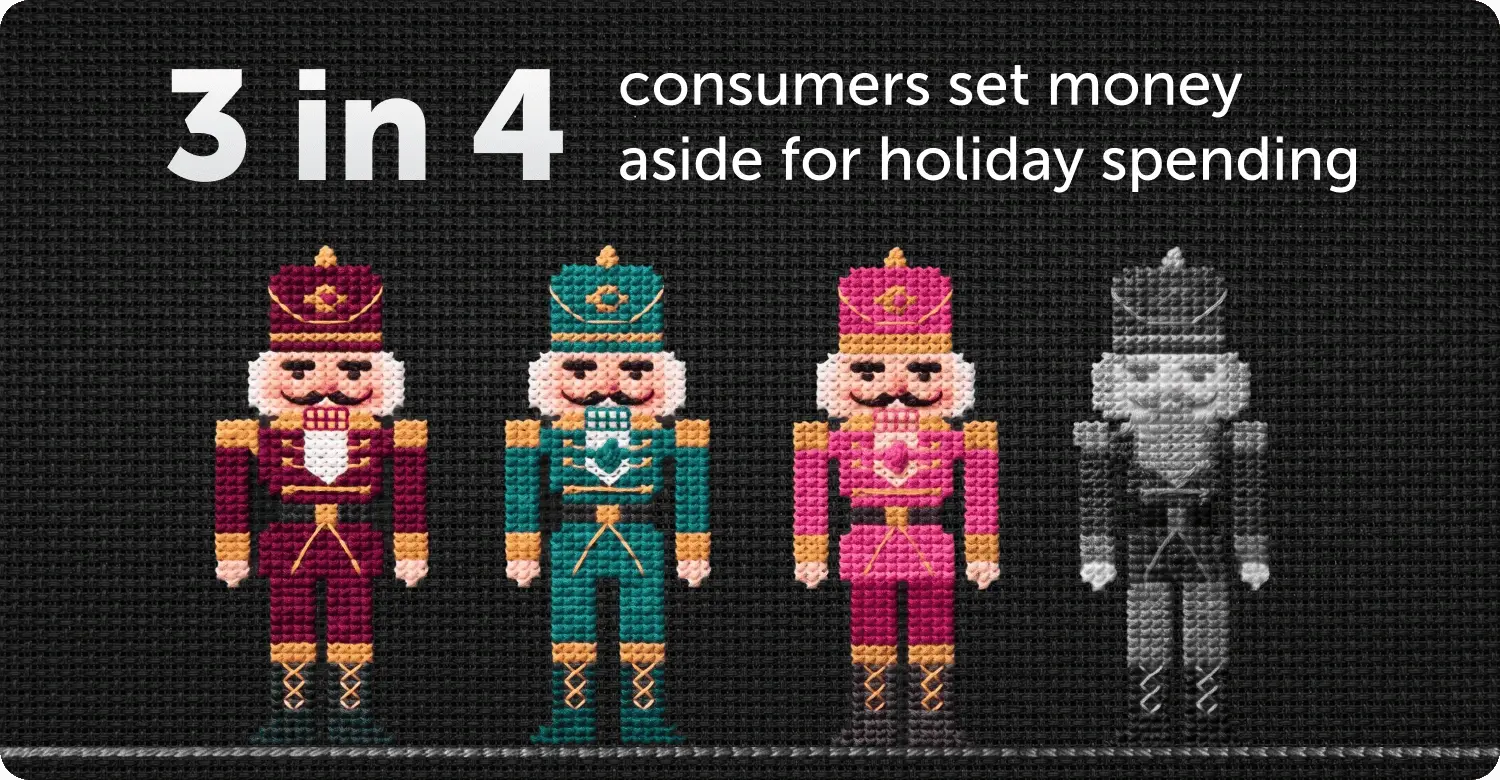
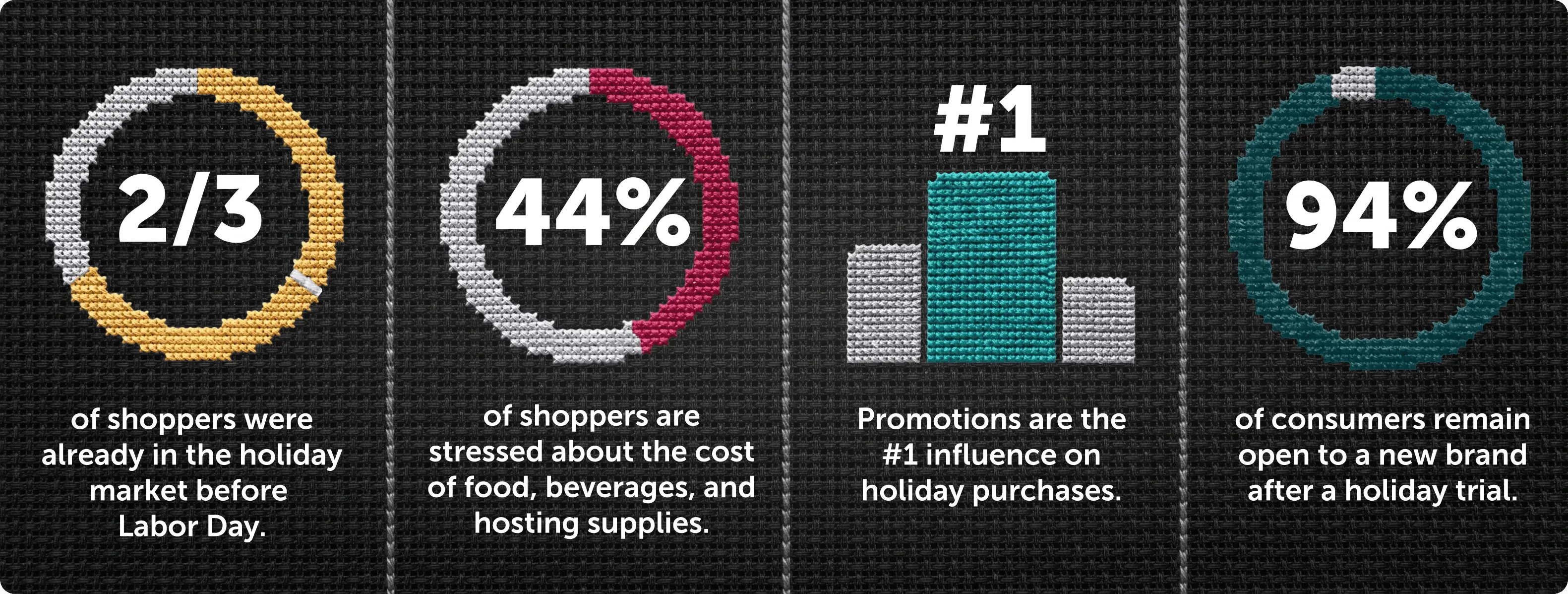
Two-thirds of shoppers were already in the holiday market before Labor Day. Three in 10 are starting earlier than they did last year. And three in four are setting money aside to pay for it.
None of that behavior is driven by enthusiasm.
Ibotta surveyed 1,002 U.S. consumers in August, and the season they describe is one of financial pressure. Nearly half call their household finances insecure, and it isn’t just the cost of gifts weighing on them. It’s the cost of food, beverages, and hosting supplies, too. At the same time, celebrations are moving home, and budgets are moving with them. So shoppers built a plan, and that plan runs on promotions.
Promotions are the single biggest influence on what they buy this season, ahead of gift lists, family recommendations, and even a brand's own reputation. When prices pinch, looking for a deal is the first thing they do. It comes before cutting back on gifts and before trading down to a cheaper brand.
That makes the next four months more than the year's largest spending window. Openness to trying a new brand sits near or above 50% in every category we tested. And after a holiday trial, only 6% of shoppers say they'd go back to their usual brands no matter what.
The offer that wins the basket in December is buying something that could last well into the new year.
The season starts before you think
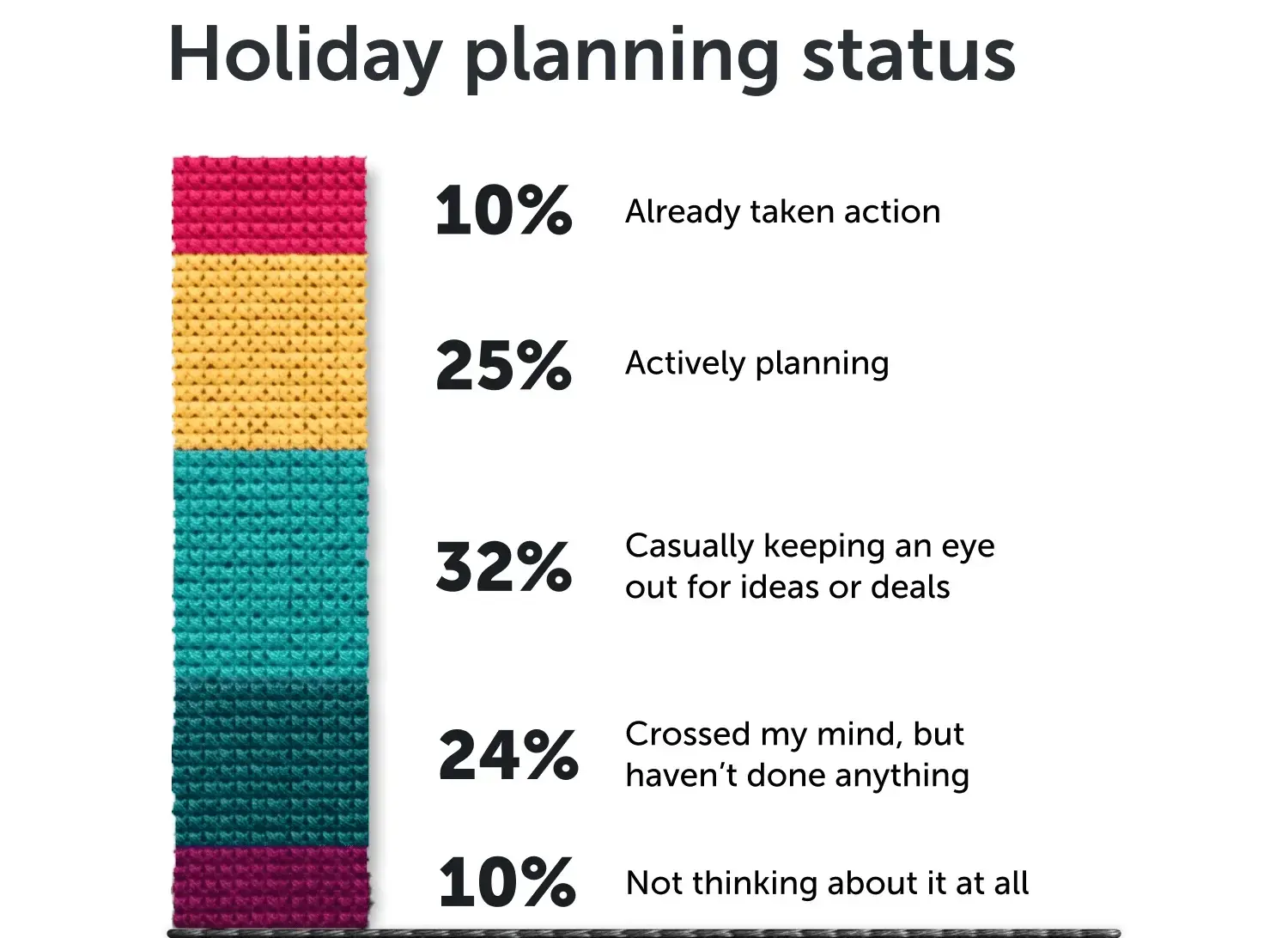
With financial pressure weighing heavily on consumers’ minds, two-thirds of shoppers surveyed were already in the holiday market ahead of Labor Day; 32% casually watching for deals and 35% actively planning or already purchasing.
There’s also a planning shift happening for consumers, with 30% anticipating an earlier start than they did last year.
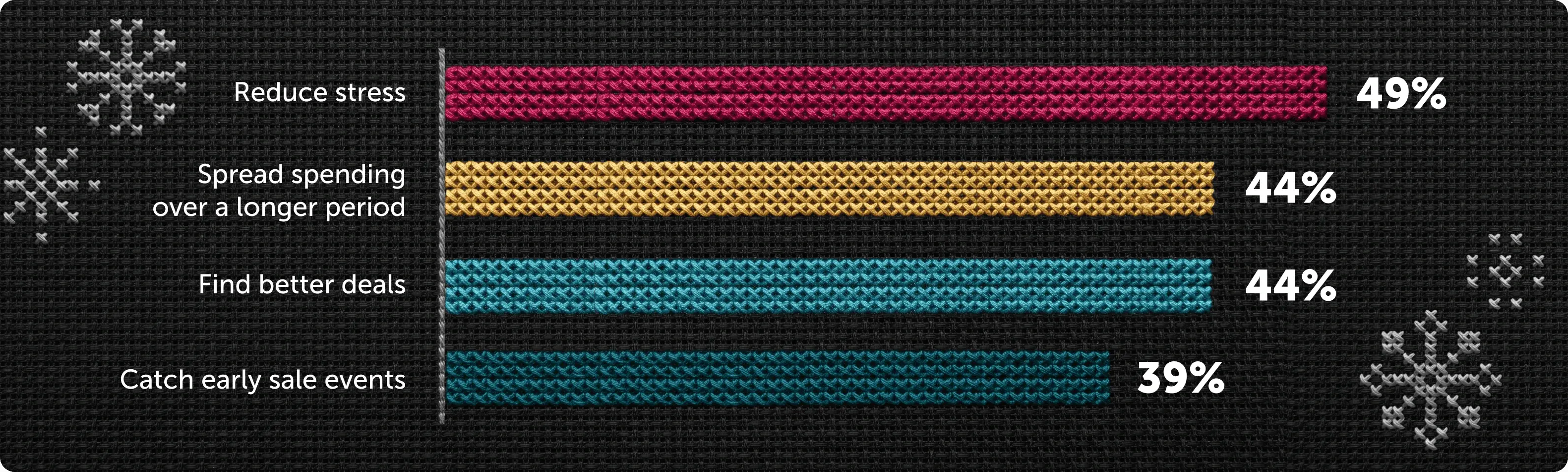
While many shoppers plan to start earlier to reduce stress, three of the top four reasons for shopping early focus squarely on financial pressure. Almost half (44%) plan to start early to spread spending over a longer period or to find better deals. Close behind, 39% plan earlier shopping to catch early sale events.
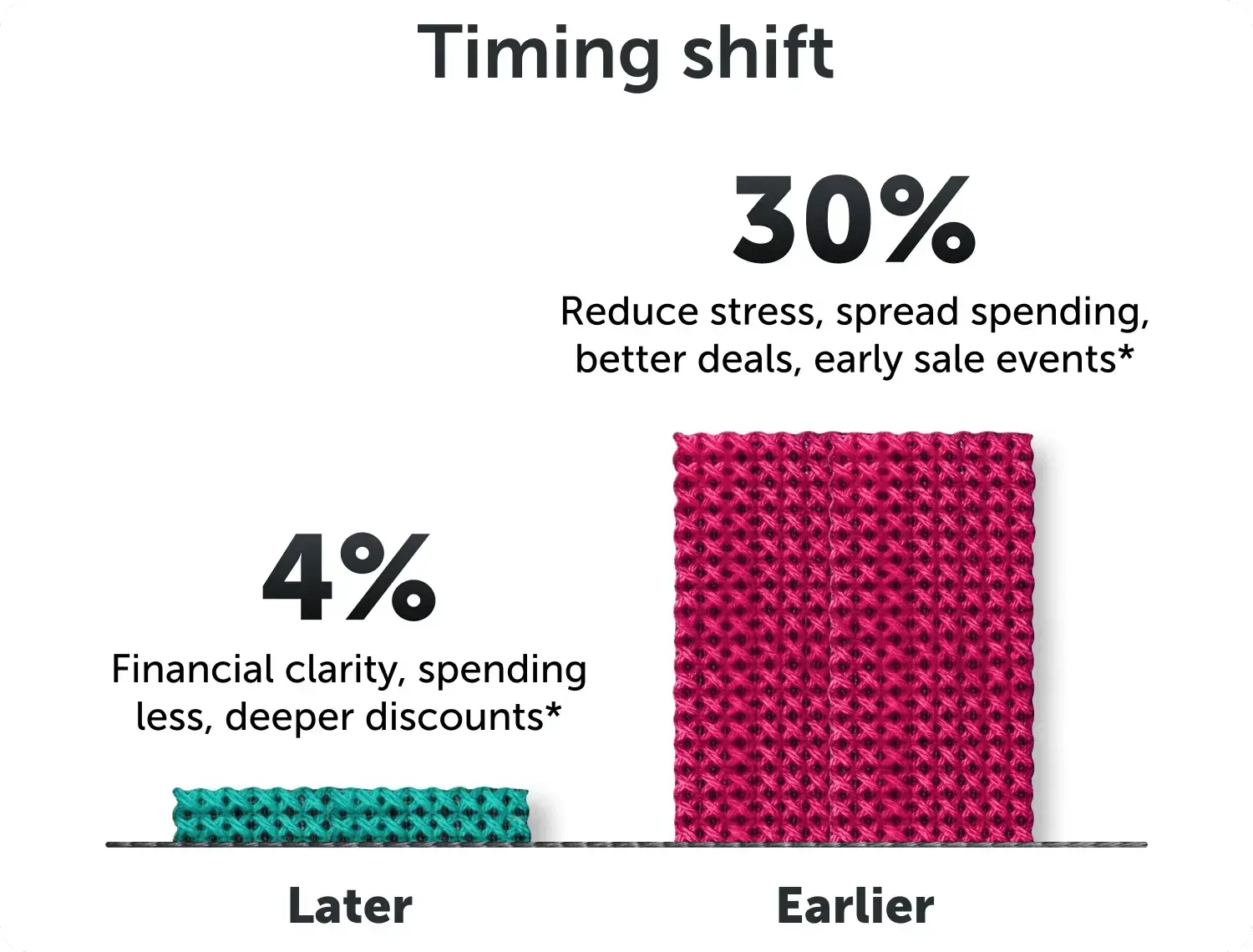
It seems logical that consumers would start early to spread spending, but there’s also a small contingent (4%) who are moving later in the season. While timing may differ, the financial motivation behind this behavior remains constant. Many are waiting for clarity on finances or holding out for deeper discounts.
Whether starting early or continuing further into the season, consumption smoothing is quickly becoming a
key concept for brands looking to tap into consumer spending in the value economy. In essence, the concept refers to adjusting spending behaviors to create a more stable standard of living over time. As the economy shifts, shoppers are spreading expenses out to seek more opportunities for value; that’s why it’s critical for CPG brands to meet them in the moment.
Shoppers start the season financially insecure
The emphasis on financial pressure is not rhetoric; the data backs it up. Going into the 2026 holiday season, almost half of consumers surveyed (45%) describe their household finances as insecure. This outlook sets the framework for the findings from this report.
Traditionally, the holidays are a stressful time as consumers look for the right gifts then rush to get them to friends, family, and other recipients. In 2026 shoppers’ concerns are shifting.
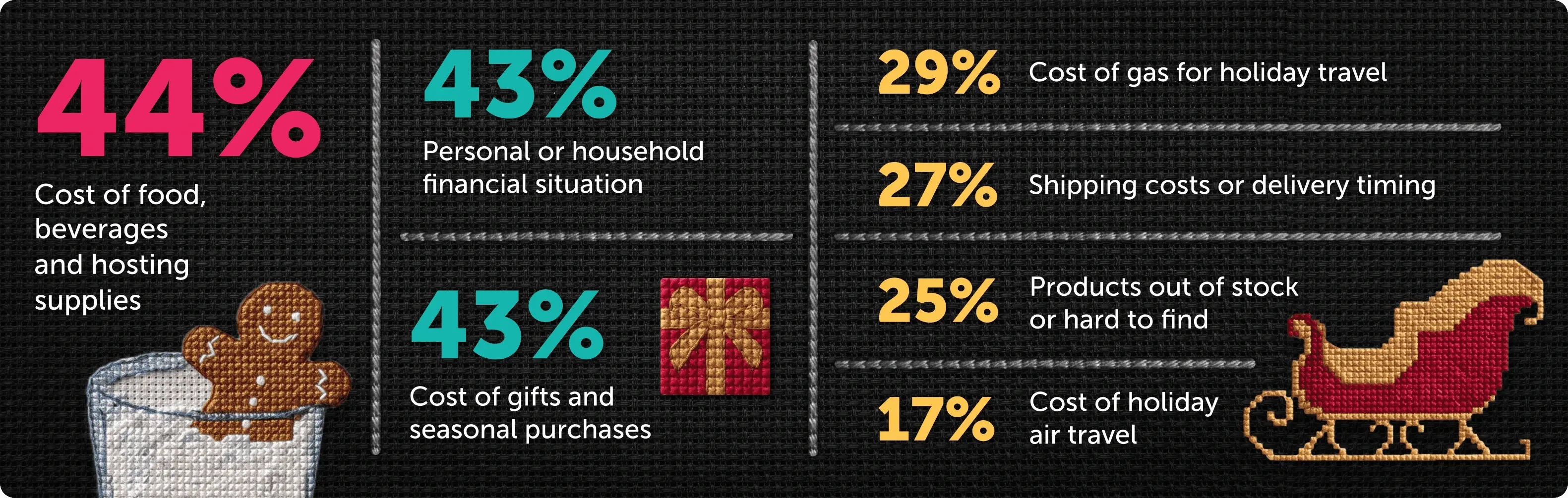
Consumers now say that the cost of food, beverages, and hosting supplies causes a greater amount of stress than the cost of gifts and seasonal purchases.
Largest holiday stressors
*9% of surveyors selected ‘none’
As fuel costs continue to rise, it may seem surprising that the survey found fewer consumers expressed concern over holiday travel costs like gas (29%) or flights (17%). That’s not because they feel secure in those expenses or because the seasonal costs are shrinking; celebrations are simply moving locations. We’re entering an era where hosting at home has become the new norm. Among shoppers shifting celebrations toward home almost half plan to host and entertain more than last year. This further underscores the stress around food, beverages, and hosting costs.
Ibotta's cross-retailer purchase data reinforces the significance of holiday hosting moments in consumers' shopping plans. Across the last two holiday seasons, the categories that reliably gain basket share are the ones attached to cooking and hosting, not the ones attached to gifting. Additionally, the data shows the correlation between inflation and spending, especially in what tradeoffs shoppers must make in response to higher prices.
From 2023 to 2024, food-at-home inflation eased from 5% to 1.2%. During that same period we observed the share of spending on grocery declining and other categories picking up the difference. Conversely we can expect this upcoming holiday season to see the inverse happen; higher inflation demanding more share of spending on grocery. When shoppers feel the constraint, they’re likely to seek out promotions to help make groceries affordable.
Promotions can solve for seasonal stress
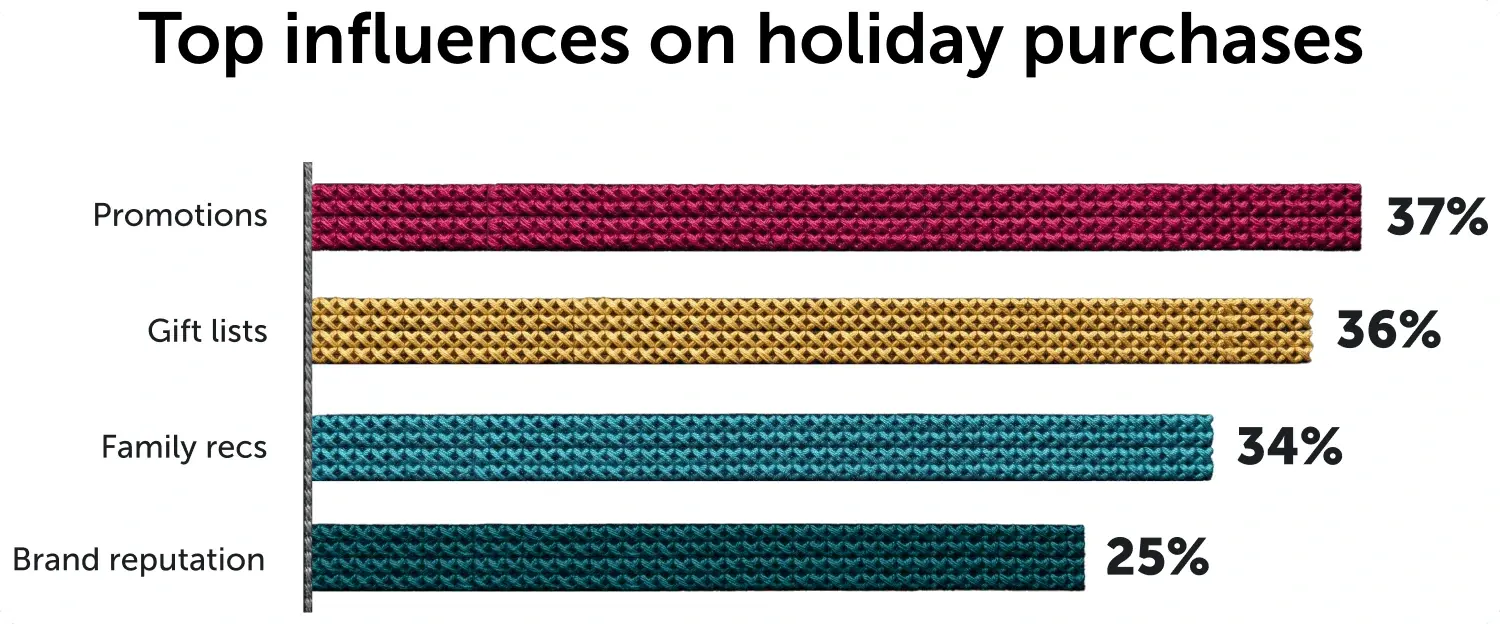
Given the economic pressures hanging over holiday, it’s no surprise that 72% of those surveyed say saving money is important this season. Our survey found that promotions are the top influence on holiday purchases (37%); ahead of gift lists (36%), family recs (34%), and the brand’s own reputation (25%). Through promotions, CPG marketers can now bridge the gap between consumers’ financial stress and their ability to buy the brands they love.
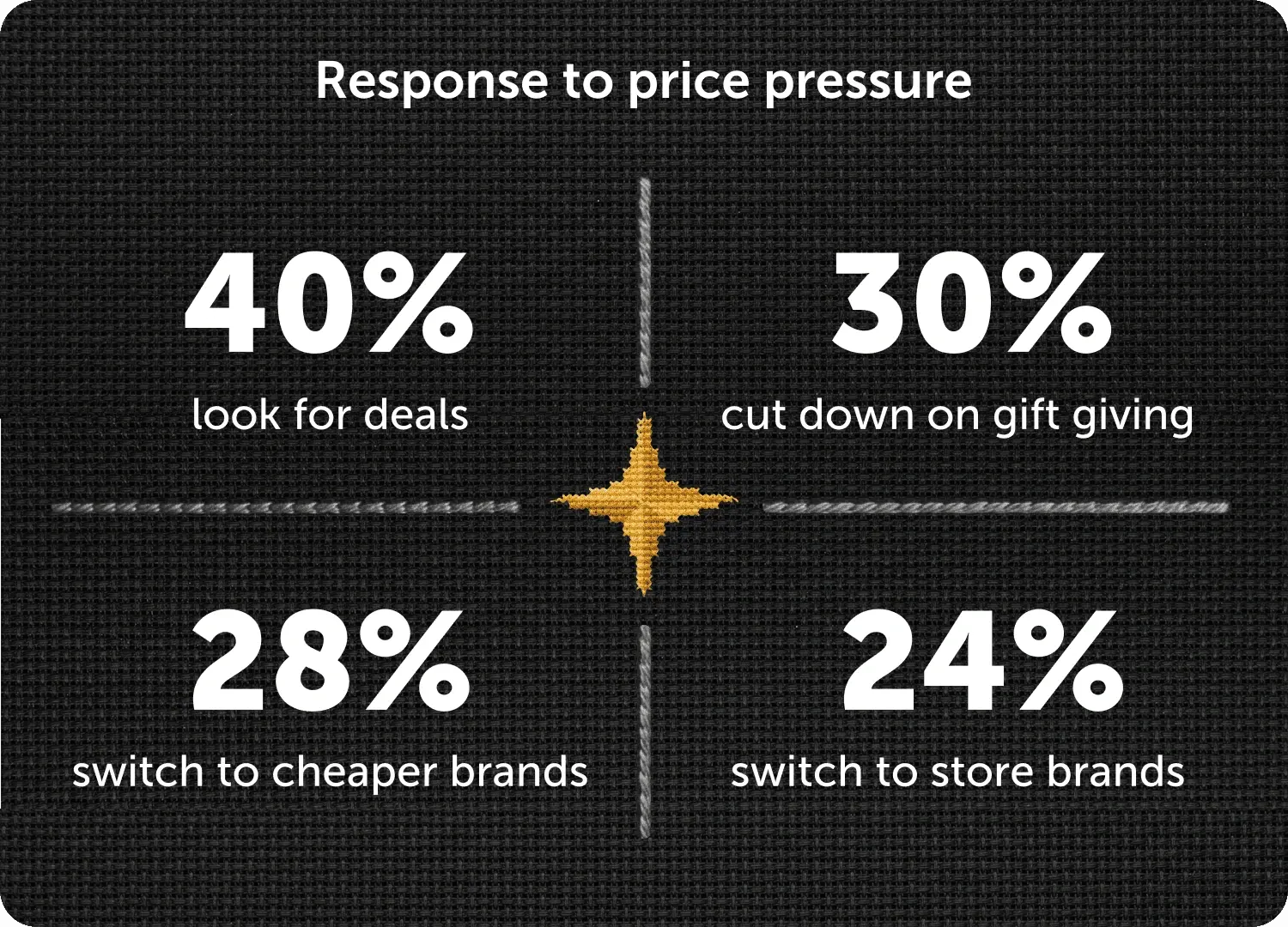
Promotions play a critical role in the holiday shopping plan with 40% of shoppers surveyed looking for deals and promotions in response to price pressure. In comparison, only 30% cut down on gift giving and even fewer switch
to cheaper brands.
The takeaway is clear; shoppers reach for a deal before they reach for a sacrifice.
When comparing these findings to Ibotta's cross-retailer purchase data, we see a common theme. Across the traditional six-week holiday period starting mid-November, purchase volume rose 7% over the six weeks prior, but redemptions rose 20% over the same timeframe*.
When deal-seeking intensifies roughly three times faster than purchasing does, promotions become an integral part of a brand’s playbook. Whether used to connect with new or lapsed customers, or to reinforce the relationships they’ve built over the years, CPG brands that lean into promotions are filling a void between consumer aspirations and consumer activations.
Ultimately, standards stay, budgets flex, and promotions bridge the gap.
Stocking up is the season's quiet through-line
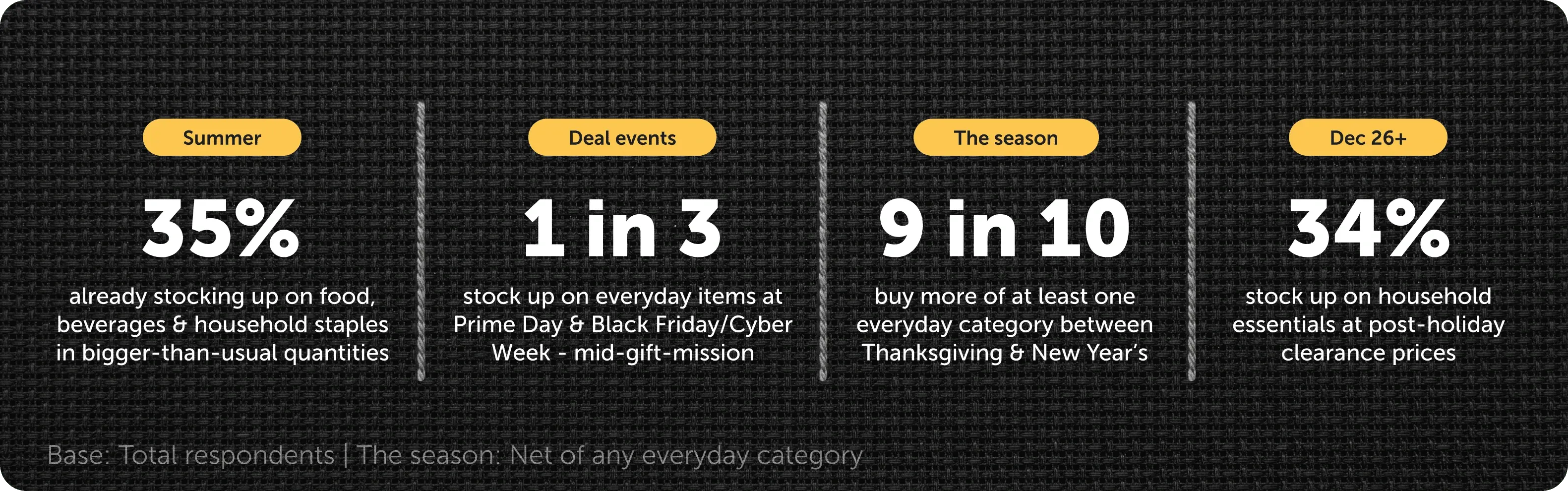
Stocking up isn't a trip shoppers make, it's a strategy they apply starting before Labor Day and continuing through January. In the summer, 35% are already buying food, beverages, and household staples in larger-than-usual quantities. During gift-season deal events like October Prime Day & Black Friday/Cyber Monday, one in three shoppers say they stock up on everyday items. The survey also shows that between Thanksgiving and New Year’s, nine in 10 people buy more of at least one everyday category. The stock-up season continues past December 26 as 34% of consumers stock up on household essentials at post-holiday clearance prices.
Stock up behaviors
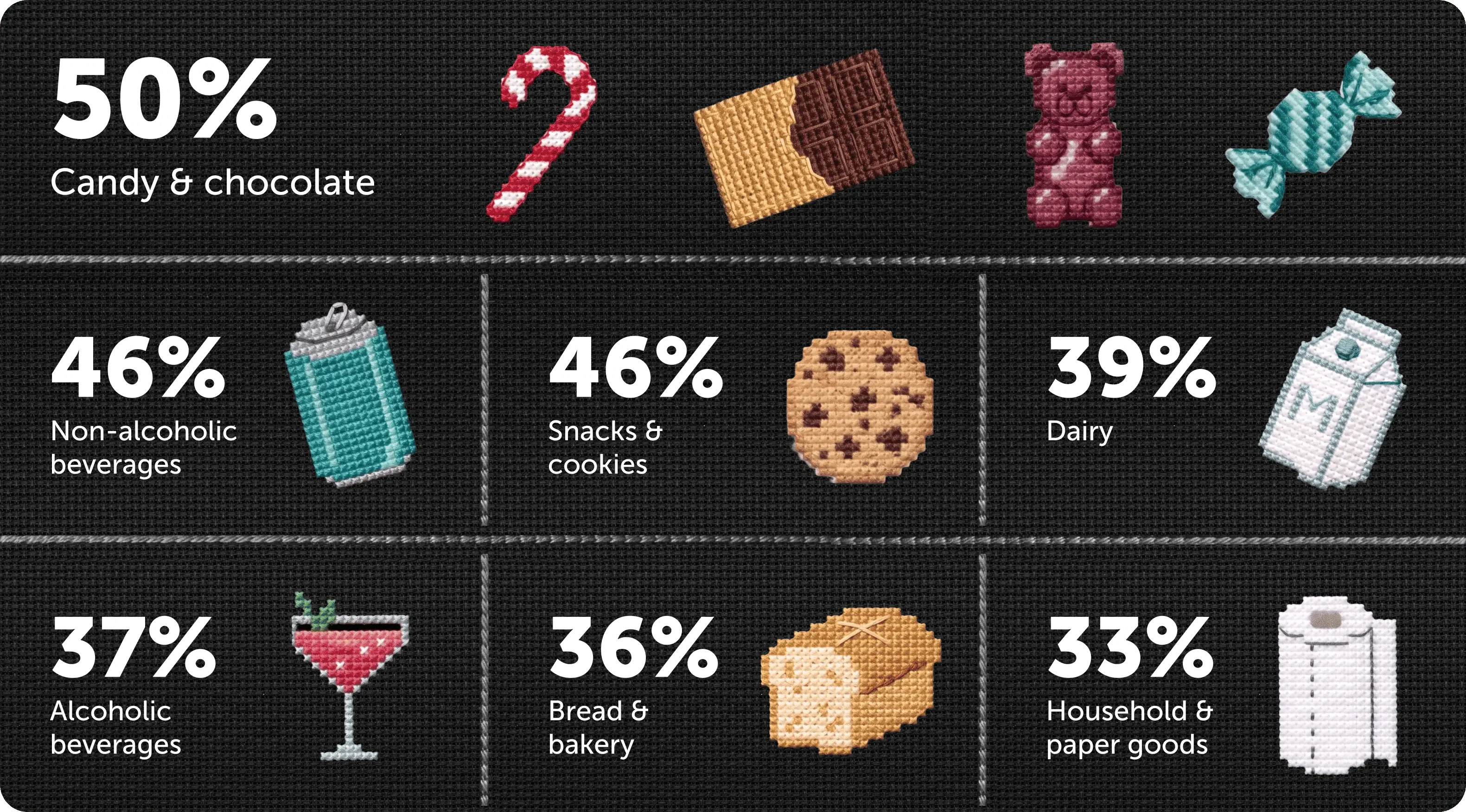
Throughout this time period, certain products see a particularly strong lift in the basket. Of those surveyed, 50% said they buy more chocolate and candy during the holidays. Following closely behind, 46% of consumers say they buy more pantry staples like soda, juice, and other beverages as well as snacks, crackers, and cookies during this time period. About a third of shoppers spend more on alcoholic beverages and household cleaning supplies/paper products. Shoppers even buy more perishable items like dairy (39%) and bread/bakery (36%) in higher quantities during these key seasonal moments. These stock-up moments reinforce the consumption smoothing tactics consumers now leverage to offset financial strain.
The everyday uplift
The takeaway for brands is simple. Holiday shopping has evolved from a seasonal splurge to a prolonged occasion for stocking up. The real challenge is carrying the momentum past December.
The 2026 holiday shopping season is already underway, but there’s still time for CPG brands to win the basket. The key to success lies in understanding how financial pressures change the way consumers plan for it. The purchase window starts earlier and runs longer than Thanksgiving to New Year’s. For CPG brands, well-timed promotions activate shoppers who are open to switching and reinforce future purchase behaviors; turning seasonal trial into new year preference.
*Based on Ibotta's cross-retailer purchase data