



June 9, 2026
If your back-to-school offer launches in August, you may be too late.
By then, shoppers have already set their budgets, built their lists, and decided which brands they are willing to consider. The season may look most active in late summer, but the window to influence what makes it into the basket opens earlier.
New data from Ibotta shows just how early that window opens. The 2026 Back to School Consumer Insights Survey, fielded among 1,002 consumers from May 11–19, found that 61% of shoppers set their back-to-school budget before July, and 47% are already building lists. Half the shoppers start purchasing in July, and another 26% start prior to July 1st.
And Back to School is more than a school-supply moment. It is a household reset that spans food, beverages, personal care, cleaning, electronics, apparel, and everyday essentials. It also marks one of the first major spending moments of the second half of the year, which plays an important role in shaping shopper behavior through Q4.
For CPG brands and shopper marketers, the competitive advantage goes to the brands that show up early, with the right offer, while shoppers are still making decisions.
The back-to-school window is already open
Back to School begins when shoppers start turning a future need into a plan. And that planning is already underway.
Before July, many households have set a budget, started building lists, and begun deciding which products are worth buying, which can wait, and where they are most likely to shop.
By the time the season reaches its visible peak, those decisions are no longer abstract. They are already shaping the basket.
Back-to-school shopping timeline
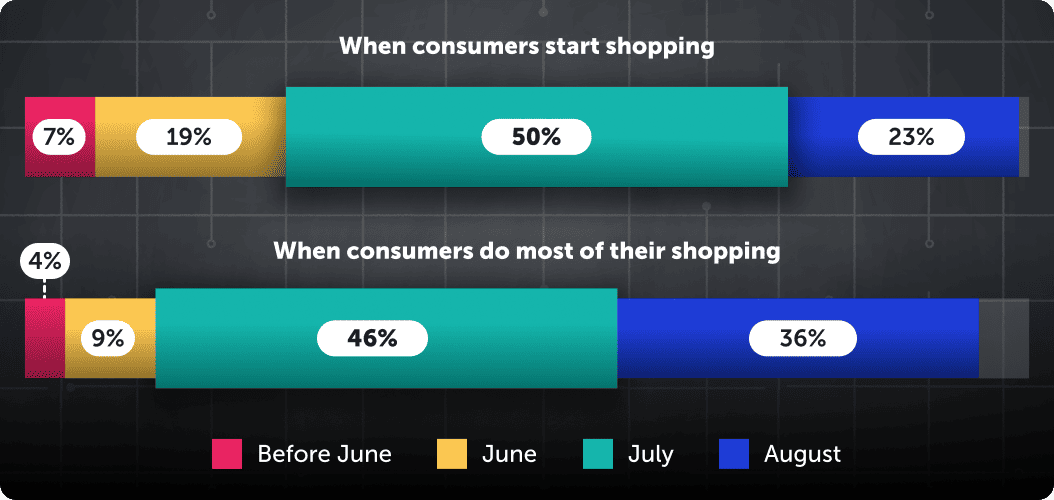
According to Ibotta’s survey, 7% of shoppers start buying before June, 19% start in June, and 50% begin in July. Nearly half say the majority of their back-to-school shopping happens in July. By August, a large percentage of shoppers are no longer forming their plans; they’re executing them.
Back-to-school surge: Notebooks, binders & paper products
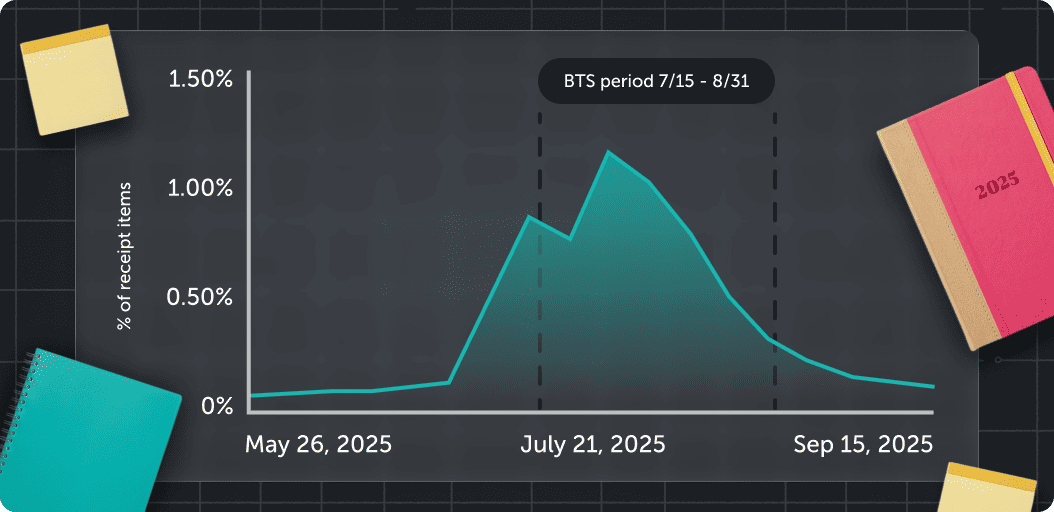
Ibotta’s first-party purchase data reinforces the point. The Office Supplies and Coloring categories begin to spike sharply the week of July 7, well before the traditional late-summer peak. At the most granular level, Notebooks, Binders & Paper Products rise from roughly 0.1% of receipt items in June to more than 1.1% at peak — a 10x surge within weeks. By August, those categories begin to fall back to baseline.
Timing is critical for brands looking to capitalize on the back-to-school season. If a campaign launches in August, it may still reach shoppers, but it is entering a market where many decisions have already been made. Lists are written. Budgets are set. Preferred retailers and brands are chosen. In some categories, the sharpest period of demand creation has already passed.
The week of July 7 is the real inflection point, when the window opens at scale. Brands in market then are competing for consideration, and brands that wait are competing for what is left.
Promotions are no longer optional
Back-to-school shopping has always required households to balance needs, wants, and budgets. But in 2026, shoppers are doing that math with rising prices in mind. Ibotta’s survey found that 93% of shoppers expect rising prices to have at least some impact on their back-to-school spending. Nearly half expect to spend more than last year, and among those shoppers, 76% cite inflation as the reason.
Amidst this pressure, buyers are becoming more deliberate about their purchases. And promotions play a central role in that decision.
Ninety-six percent of back-to-school shoppers say promotions have at least some influence on their purchases, while 56% say promotions are “very” or “extremely” influential. Across major back-to-school categories, 75% to 85% of shoppers seek a promotion before committing.
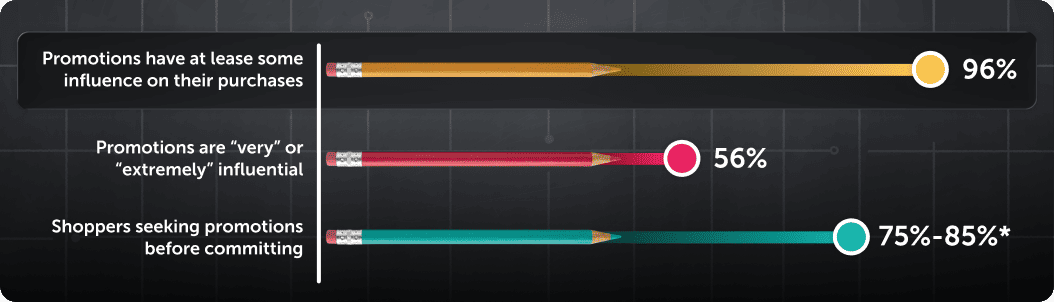
*Range across categories
Brands need to move past the idea of promotions as a simple discount lever. In a high-pressure spending environment, the offer helps shoppers feel confident about the purchase. It gives them permission to act.
When no promotion is available, only about 32% of shoppers say they pay full price. The rest look for another way to solve the problem: roughly 27% switch to a lower-priced name brand, 19% switch to a store brand, and 17% shop at a different store.
This is the competitive reality of Back to School. The shopper may like a brand. They may have bought it before. They may even have it on their list. But during a seasonal spending moment, consumer loyalty is more fickle.
The brand with the offer has a stronger chance of staying in the basket. The brand without one creates an opening for a competitor, a private label alternative, or another retailer.
Value isn’t just about price
The promotions story is not the same as a race to the bottom.
Back-to-school shoppers may be budgeting and spending strategically, but they’re not just looking for the lowest possible price. They’re trying to find the best value.
Ibotta’s survey found that 76% of shoppers prioritize getting the best deals and discounts, and 76% plan to shop multiple stores to find them. But 69% also say they are willing to spend more on high-quality items that last. Another 68% say they usually end up spending more than planned.
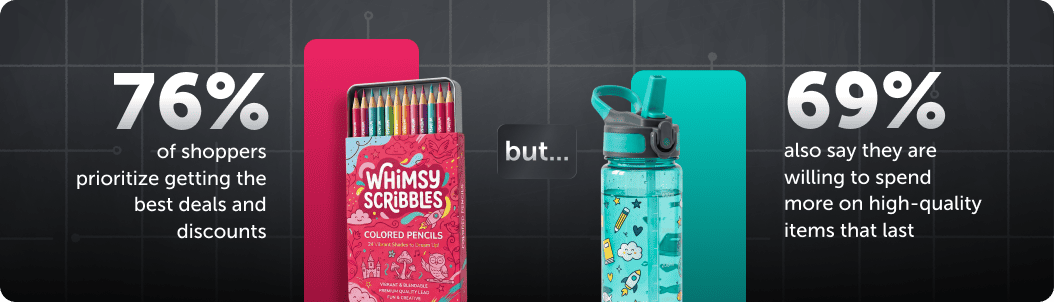
Top 2 box agreement with statements
Shoppers are trying to save money, but they are also trying to avoid waste. A cheap product that does not hold up is not necessarily a good value. Often a higher-quality product with a compelling offer can feel like the smarter purchase.
That is especially important for CPG brands that may assume Back to School requires aggressive discounting to win. The data suggests a more nuanced opportunity. Shoppers are not simply asking, “What is the cheapest option?” They are asking, “Is this worth buying now?”
A strong offer can answer that question. It can make a quality product feel accessible, reducing hesitation without undermining the brand’s value. It can also help shoppers feel that they are making a responsible choice for their household.
The same pattern shows up in shopper attitudes toward trends. Only 35% of shoppers say they feel pressure to buy the latest back-to-school trends, and only 25% rely on social media or influencers for product ideas.
That does not mean trends are irrelevant, just that shoppers are grounded in practical decisions. They are looking for products that fit their routines, their budgets, and their standards for quality.
For brands, the best back-to-school promotion strategy is not necessarily the deepest discount. It is the offer that helps shoppers recognize value at the moment they are ready to act.
The lunchbox occasion
School supplies may define the season, but they do not occupy the entire basket.
Back to School is a household transition. The lunchbox encompasses what children bring to school as well as the larger routine that surrounds the school day: breakfast on busy mornings, snacks that feel healthier or more convenient, drinks that fit household preferences, storage products that make packing easier, and hygiene products that help families feel prepared for the return to classrooms.
In short, the back-to-school basket is much broader than many brands assume.
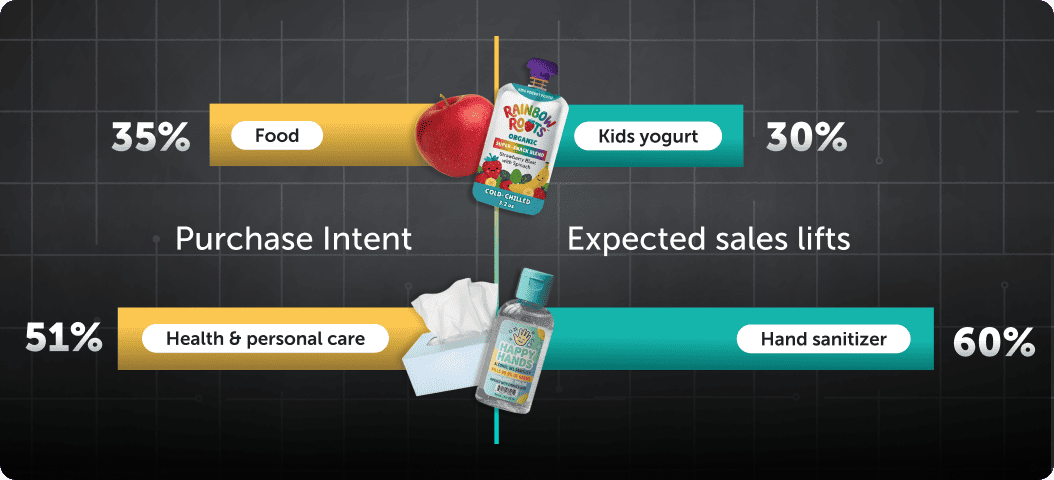
Our survey shows meaningful purchase intent across several CPG categories. Thirty-five percent of shoppers plan to buy food for Back to School, with 51% expecting to spend more than last year. Twenty-eight percent plan to buy beverages, with 45% expecting to spend more. Health & personal care is even larger, with 51% purchase intent and 47% expecting to spend more. Cleaning supplies also show 35% purchase intent, with 48% expecting higher spend.
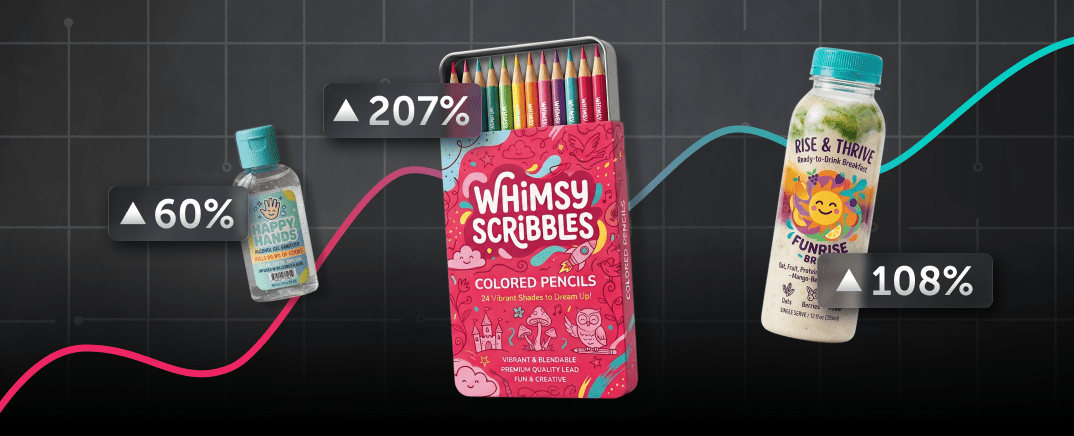
Ibotta first-party purchase data shows the same pattern. Beyond the expected lifts in school and office categories, several non-traditional back-to-school categories overperform during the season. Hand sanitizer sees a 60% lift, kids yogurt rises 30%, facial tissue rises 29% and food storage bags rise 19%. Ready-to-drink breakfast beverages & shakes show a 2.08x spike, while portable drinkware averages a 1.18x increase during the back-to-school shopping season compared with shoulder months.
The 2026 early signal data adds another layer. From March through May, Ibotta data points to health and wellness as the clearest emerging theme, with refrigerated snack bars showing strong early growth. The brief identifies these high-protein, health-conscious lunchbox items as one of the biggest emerging opportunities heading into Back to School. Flavored sparkling water is also showing more moderate growth, consistent with the same health and wellness trend.
For food, beverage and personal care brands, Back to School is a measurable promotional window. Brands that underweight the season because they are not in traditional school-supply categories may be missing one of the more practical household spending occasions of the year.
The shopper may not call it “Back to School” when they buy yogurt, snack bars, sanitizer, or food storage bags. But the behavior says those purchases are part of the same seasonal reset.
Shoppers are moving across every channel
Back-to-school shopping is not limited to one retailer, one format, or one fulfillment method. It is a multi-stop, multi-channel planning process.
The back-to-school basket now stretches well beyond school supplies. Shoppers are not buying one kind of product in one kind of store: they are building a basket that cuts across school supplies, apparel, electronics, household essentials, food, beverages, and personal care — and each of those environments can pull them into a different retail environment.
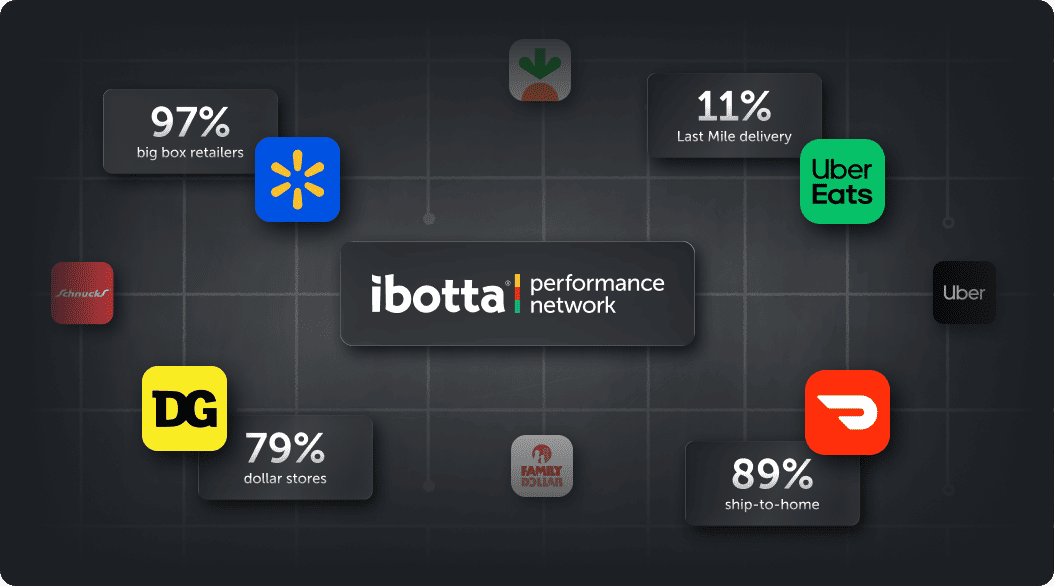
Our survey shows just how broad the channel map has become. Ninety-seven percent of back-to-school shoppers plan to shop at big box retailers such as Walmart or Target. But 91% also plan to shop online, 79% at dollar stores, 77% at apparel retailers, and 74% at office supply stores. Among online shoppers, 89% use ship-to-home, 33% use buy online, pick up in-store or curbside pickup, and 11% use last-mile delivery.
The category data also shows that back-to-school spending extends across primary categories. Ibotta first-party purchase data shows lift not only in Craft Supplies, but also in Household Essentials, Electronics & Appliances and Apparel. Craft Supplies rose 39.5%, Household Essentials rose 24.1%, Electronics & Appliances rose 17.8% and Apparel rose 12.4% during the back-to-school window compared with flanking periods.
For brands, the challenge is being present across the places where shoppers are actually making decisions.
A brand may have strong visibility in one major retailer and still miss a meaningful share of the shopper’s actual journey. A household might compare prices online, buy school supplies in-store, add lunchbox items to a grocery order, pick up apparel through curbside and fill gaps at a dollar store.
That means thinking beyond a single point of activation. It means aligning offer timing with when lists are being made and when categories begin to spike. It means understanding how shoppers move between stores, channels, and fulfillment options. Lastly, it means measuring whether promotions are influencing incremental purchases, not just whether they are generating activity.
Back-to-school shoppers are already doing the work of comparison. Brands need to make sure they can be found — and chosen — wherever that comparison happens.
Back to School may be the start of the Holiday Season
Back to School is often treated as a contained seasonal moment. However for many households, it also marks the beginning of a longer spending cycle.
Ibotta’s survey found that 44% of consumers say back-to-school shopping is when they start thinking about, or buying for, the holidays.
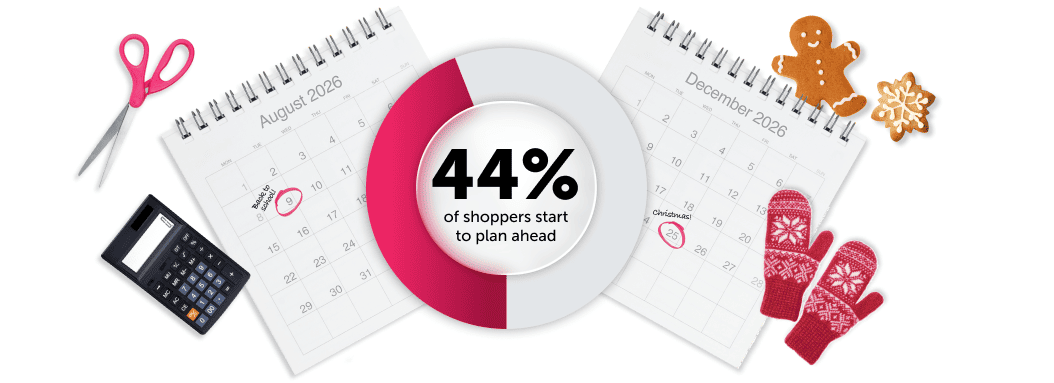
Put plainly, a back-to-school purchase is not always just a back-to-school purchase. For some consumers, it is the first touchpoint in a longer sequence of household planning, budgeting and brand consideration that carries into fall and Q4.
Brands that win a place in the back-to-school basket may also earn familiarity before Halloween, Thanksgiving, and the end-of-year holidays. Helping a shopper feel prepared in July may have an advantage when that shopper is making the next round of seasonal decisions.
And for CPG brands, many of the categories that matter during Back to School — like snacks, beverages, cleaning supplies, personal care, and household essentials — remain relevant throughout the rest of the year. The season can function as an early relationship-building moment, not just a short-term sales window.
To treat it that way, brands should not look at Back to School only as a late-summer activation. They should see it as the first major planning moment of the second half of the year, one that can create purchase momentum, reveal shopper preferences, and establish promotional relationships before the holiday marketplace becomes even more crowded.
What brands should do now
Shoppers are setting budgets before July and building lists before many campaigns go live. They are actively looking for promotions, but they are not simply chasing the cheapest option. They are moving across retailers and channels. They are buying well beyond school supplies. And for many, this is the moment when the holiday season starts to come into view.
The risk is showing up too late, with too narrow a category lens or with an offer strategy that does not match how shoppers are actually making decisions. In that scenario, brands may lose the basket not because demand is absent, but because the shopper has already found another way to meet the need. The opportunity is to meet shoppers earlier, with offers that make value clear, across the categories and channels where back-to-school behavior is already taking shape.